A Complete Guide
Data centers are the beating heart of the digital economy. From global financial transactions to real-time cloud collaboration, the seamless flow of information between these facilities is critical. As businesses scale their operations across regions and continents, the need to connect data centers securely, efficiently, and with high performance has never been more urgent.
But linking these powerful facilities involves more than just running fiber between them. It requires handling massive data volumes, meeting strict low-latency demands, and ensuring airtight security.
This complete guide will explain what DCI is, its core objectives, the different architectures, and the key technologies that make it all possible.
This is where Data Center Interconnect (DCI) comes in.
But linking these powerful facilities involves more than just running fiber between them. It requires handling massive data volumes, meeting strict low-latency demands, and ensuring airtight security.
This complete guide will explain what DCI is, its core objectives, the different architectures, and the key technologies that make it all possible.
This is where Data Center Interconnect (DCI) comes in.
What is Data Center Interconnect (DCI)?
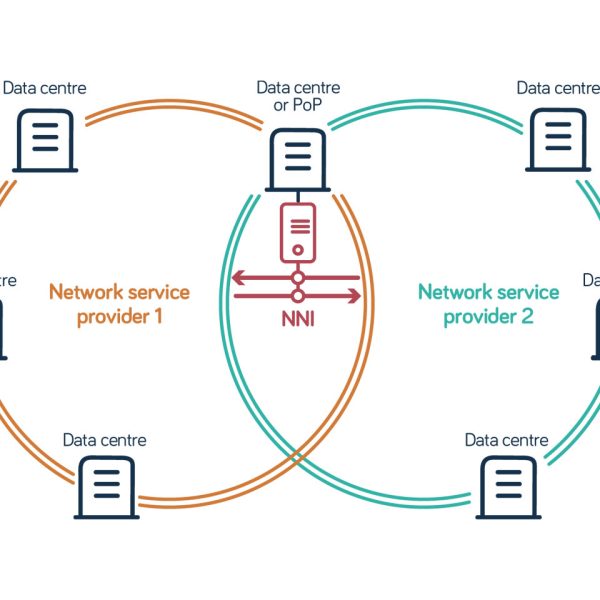
Data Center Interconnect (DCI) is the networking technology and infrastructure that links two or more geographically separate data centers.
It enables the fast, secure, and reliable exchange of data across these facilities using a combination of:
– High-capacity fiber optic links
– Dense Wavelength Division Multiplexing (DWDM)
– Software-Defined Networking (SDN)
DCI makes distributed AI infrastructure possible by keeping these geographically dispersed sites tightly synchronized, acting as a single, powerful system.
It enables the fast, secure, and reliable exchange of data across these facilities using a combination of:
– High-capacity fiber optic links
– Dense Wavelength Division Multiplexing (DWDM)
– Software-Defined Networking (SDN)
DCI makes distributed AI infrastructure possible by keeping these geographically dispersed sites tightly synchronized, acting as a single, powerful system.
DCI and Hyperscale Data Centers
Hyperscale data centers are massive facilities designed to support thousands of servers and exabytes of storage, powering the world’s largest cloud, social media, and AI companies.
The true power of hyperscale isn’t in one facility—it’s in the network. DCI technology connects multiple hyperscale locations into a cohesive, intelligent network, enabling global scale and resource pooling that would otherwise be impossible.
The true power of hyperscale isn’t in one facility—it’s in the network. DCI technology connects multiple hyperscale locations into a cohesive, intelligent network, enabling global scale and resource pooling that would otherwise be impossible.
Key Objectives and Benefits of DCI
Implementing a robust DCI strategy delivers significant business advantages:
1. Reduce Operational Costs
DCI allows data centers to share processing and storage resources, reducing duplicate infrastructure and capital expenses. It also helps:
• Lower reliance on expensive public cloud bandwidth.
• Enable building data centers in areas with lower real estate and energy costs.
• Streamline disaster recovery, minimizing costly downtime.
• Lower reliance on expensive public cloud bandwidth.
• Enable building data centers in areas with lower real estate and energy costs.
• Streamline disaster recovery, minimizing costly downtime.
2. Strengthen Disaster Recovery and Business Continuity
DCI enables geographic distribution of backups. If one facility fails due to a power outage, natural disaster, or cyber-attack, operations can failover to another site with minimal disruption.
3. Improve Global Access and Connectivity
By connecting data centers across regions, DCI ensures users, employees, and customers can access data and applications from the nearest location.
This reduces latency and provides a seamless experience for a hybrid workforce and global user base.
This reduces latency and provides a seamless experience for a hybrid workforce and global user base.
4. Enhance Data Security in Transit
Modern DCI solutions incorporate robust end-to-end encryption, protecting sensitive data as it moves between sites and helping organizations meet strict compliance standards
(like HIPAA, GDPR, and PCI-DSS).
(like HIPAA, GDPR, and PCI-DSS).
5. Support Dynamic Load Balancing
DCI allows organizations to distribute network traffic and computing workloads across multiple data centers based on real-time demand.
This prevents bottlenecks, optimizes resource use, and is essential for managing compute-intensive tasks like AI model training.
This prevents bottlenecks, optimizes resource use, and is essential for managing compute-intensive tasks like AI model training.
Understanding DCI Architecture Types
There is no one-size-fits-all DCI solution. The right architecture depends on your specific needs for scalability, complexity, and cost.
| Architecture | Description | Best For |
| Point-to-Point | A direct, simple link between two data centers. | Short-distance links with no plans for expansion. |
| Hub-and-Spoke | A central “hub” data center connects to multiple “spoke” sites. | Organizations with a central primary data center. |
| Multipoint | Connects more than two data centers in a single network. | Improving resource sharing and redundancy across several sites. |
| Meshed Interconnects | All data centers are interconnected in a web-like structure. | Maximum redundancy, high availability, and critical workloads. |
| Software-Defined (SDI) | Uses SDN to manage connections via software for dynamic control. | Networks requiring high agility and real-time adaptation. |
| Cloud Interconnects | Links on-premises data centers with public/private cloud providers. | Hybrid cloud strategies and cloud bursting. |
Core DCI Technology Components
A modern DCI infrastructure relies on several key technologies working in unison:
Fiber Optic Cables:
The physical backbone of DCI, using light to transmit data over long distances with high bandwidth and immunity to interference.
Single-mode fiber is standard for long-haul DCI links.
Wavelength-Division Multiplexing (WDM):
This technology multiplies the capacity of a single fiber strand by transmitting multiple data signals on different light wavelengths simultaneously.
DWDM (Dense WDM) is the preferred choice for high-capacity DCI.
Networking Equipment:
This includes high-performance routers, switches, transponders, and muxponders that direct traffic, convert signals, and maximize fiber bandwidth.
Software-Defined Networking (SDN):
SDN brings automation and centralized control to DCI, making it easier to provision, manage, and scale interconnect resources on demand.
Optical Transport Network (OTN):
OTN acts as a “digital wrapper,” providing a standardized way to transport data over fiber with strong management, monitoring, and error-correction capabilities.
Fiber Optic Cables:
The physical backbone of DCI, using light to transmit data over long distances with high bandwidth and immunity to interference.
Single-mode fiber is standard for long-haul DCI links.
Wavelength-Division Multiplexing (WDM):
This technology multiplies the capacity of a single fiber strand by transmitting multiple data signals on different light wavelengths simultaneously.
DWDM (Dense WDM) is the preferred choice for high-capacity DCI.
Networking Equipment:
This includes high-performance routers, switches, transponders, and muxponders that direct traffic, convert signals, and maximize fiber bandwidth.
Software-Defined Networking (SDN):
SDN brings automation and centralized control to DCI, making it easier to provision, manage, and scale interconnect resources on demand.
Optical Transport Network (OTN):
OTN acts as a “digital wrapper,” providing a standardized way to transport data over fiber with strong management, monitoring, and error-correction capabilities.
Overcoming DCI Challenges and Constraints
Deploying DCI isn’t without its hurdles. A strategic partner can help you navigate:
Ensuring Redundancy & Availability:
Avoid single points of failure by designing redundant links across diverse paths.
Managing Complexity:
The setup process involves complex routing and traffic engineering.
A Managed Optical Fiber Network (MOFN) can provide performance and control with simplified management.
Juggling Multiple Carriers:
Coordinating several carrier relationships is time-consuming. A partner with broad vendor relationships can simplify this.
Maintaining Security:
Beyond encryption, a multi-layered security strategy is essential when data traverses third-party infrastructure.
Planning for Scalability:
Your DCI must grow with your data demands. An experienced partner can help future-proof your investment.
Ensuring Redundancy & Availability:
Avoid single points of failure by designing redundant links across diverse paths.
Managing Complexity:
The setup process involves complex routing and traffic engineering.
A Managed Optical Fiber Network (MOFN) can provide performance and control with simplified management.
Juggling Multiple Carriers:
Coordinating several carrier relationships is time-consuming. A partner with broad vendor relationships can simplify this.
Maintaining Security:
Beyond encryption, a multi-layered security strategy is essential when data traverses third-party infrastructure.
Planning for Scalability:
Your DCI must grow with your data demands. An experienced partner can help future-proof your investment.
Ready to Build Your High-Performance Data Center Interconnect?
Explore GOIP‘s comprehensive DCI solutions to design a network that is secure, scalable, and built for the demands of AI and hyperscale computing.